Showing posts with label #BEIRUT. Show all posts

Wednesday, December 3, 2014

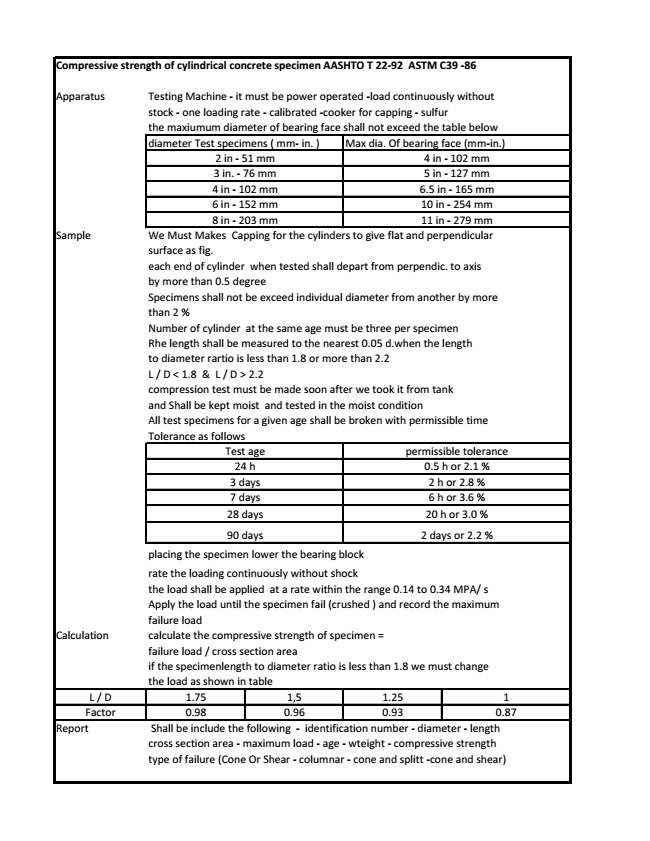
M.test#6: Compressive Strength Cylinders


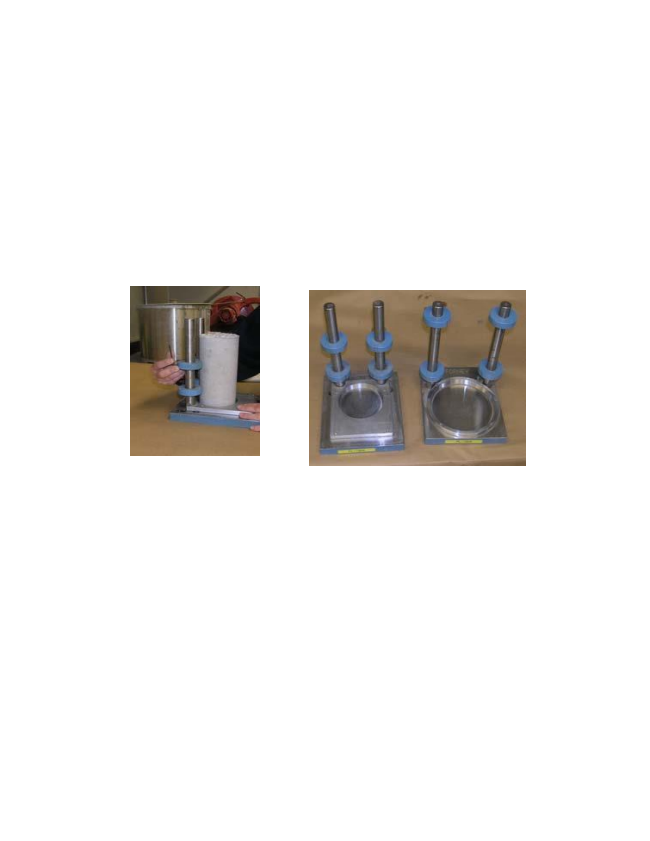
M.test#6: Test for compressive strength of cylinders or cubes (AASHTO T 22-92) (ASTM C39)

This test method covers determination of compressive strength of cylindrical concrete specimen such as molded cylinders and cubes . It is limited to concrete having a unit weight in excess of 800 kg/m^3

Sunday, November 16, 2014

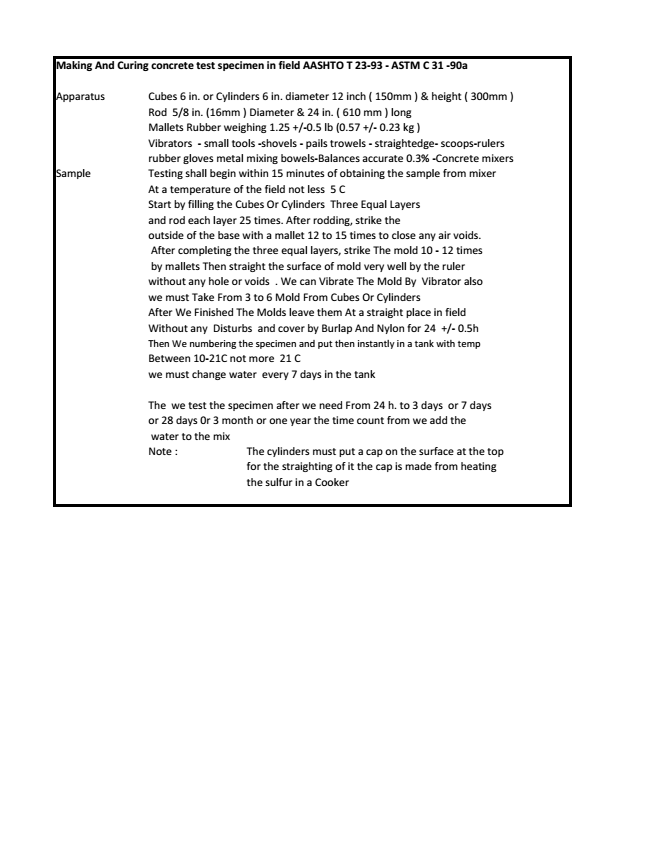
M.Test#5 : Making and curing compressive test specimens in Field AASHTO T 23-93

M.Test#5 : Making and curing compressive test specimens in Field AASHTO T 23-93

This test method covers procedures for making and curing cylindrical and prismatic beam specimen from representative sampled fresh concrete for a construction project. 
The concrete used to make molded specimens shall have the same levels of slump , air content , and percentage of coarse aggregate as represented in concrete 


M.test#4 Making and curing concrete test specimen in lab AASHTO T 126-93


M.Test#4: Making and curing compressive test specimen in lab AASHTO T 126-93

This test method covers procedures for making and curing test specimen of concrete in laboratory under accurate control of materials and test conditions using concrete that can be consolidate by rodding or vibration as described here


Saturday, November 15, 2014

M.test#3 : test method for unit weight ASTM C138

M.test#3 : Test method For Unit Weight ASTM C 138


This test method covers the weight of concrete per meter cube from air entrained machine
We can find unite weight of concrete by dividing the weight of concrete to volume of machine of machine g/cm*3


M.test#2 Air Entrained ASTM C138

M.test#2 : Test method for Air Entrained ASTM C138

This test method covers determination of the air content of freshly mixed concrete from observation of the change in volume of concrete with change in pressure


Tuesday, November 4, 2014

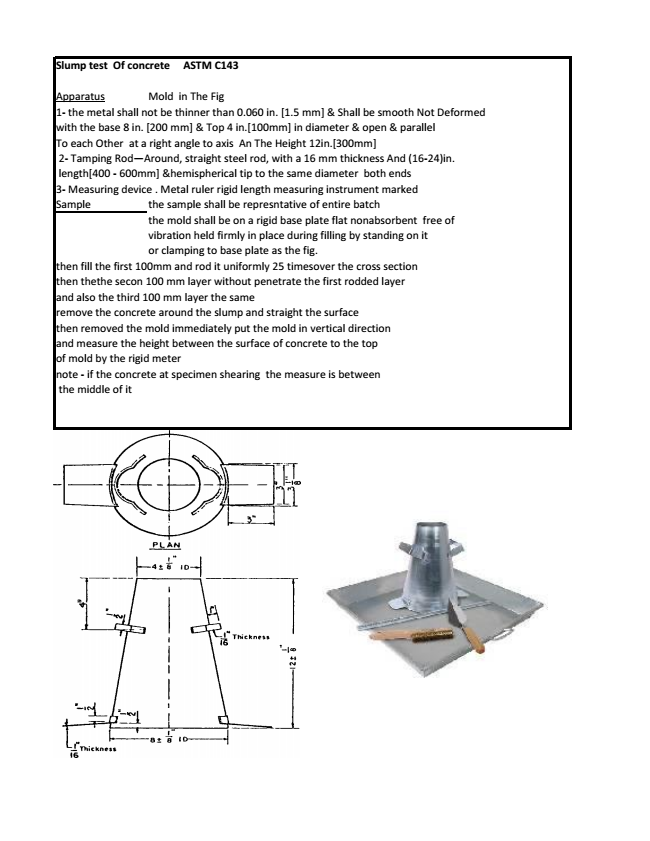
M.test#1 Slump Test ASTM C 143


Mix design of concrete test#1: SLUMP TEST ASTM C 143


This test method covers determination of slump of fresh concrete both in the laboratory and in the field .


SUMMARY OF THE SECOND CHAPTER : SOIL TESTS FOR HIGHWAY PURPOSES

SUMMARY OF THE SECOND CHAPTER : SOIL TESTS FOR HIGHWAY PURPOSES


Soil engineering is vital within civil engineering. The properties of a soil influence and affect a structure when being built and as a result the soil must be tested before designing

We end this chapter of "soil tests for highway purposes" with our 8 posted tests , and our next stop is " Mix Design of Concrete ACI 211"

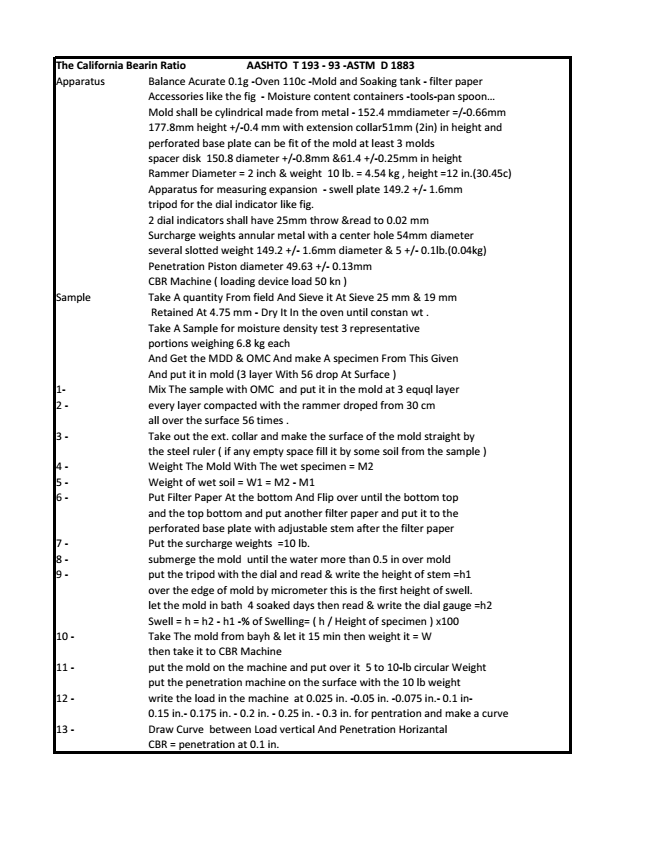
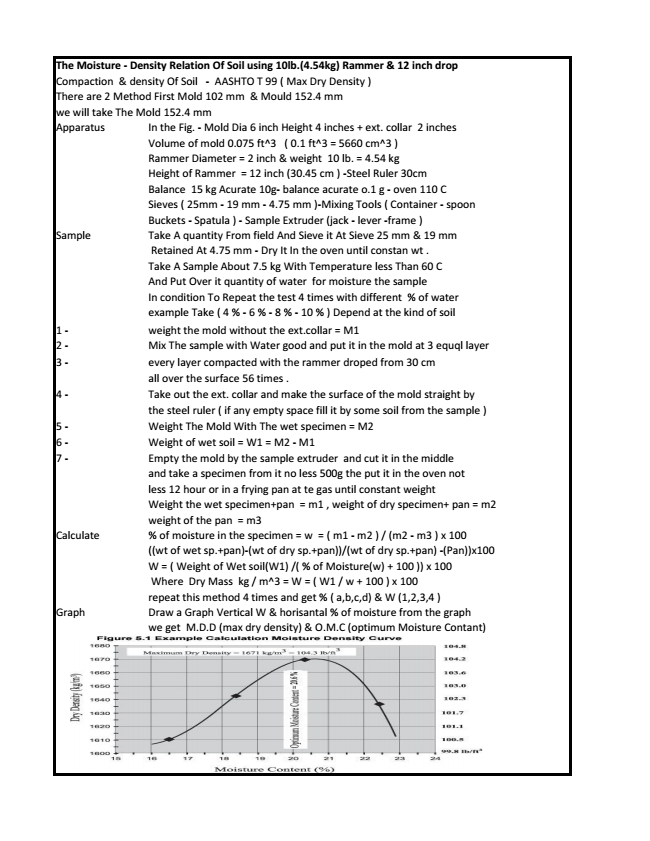
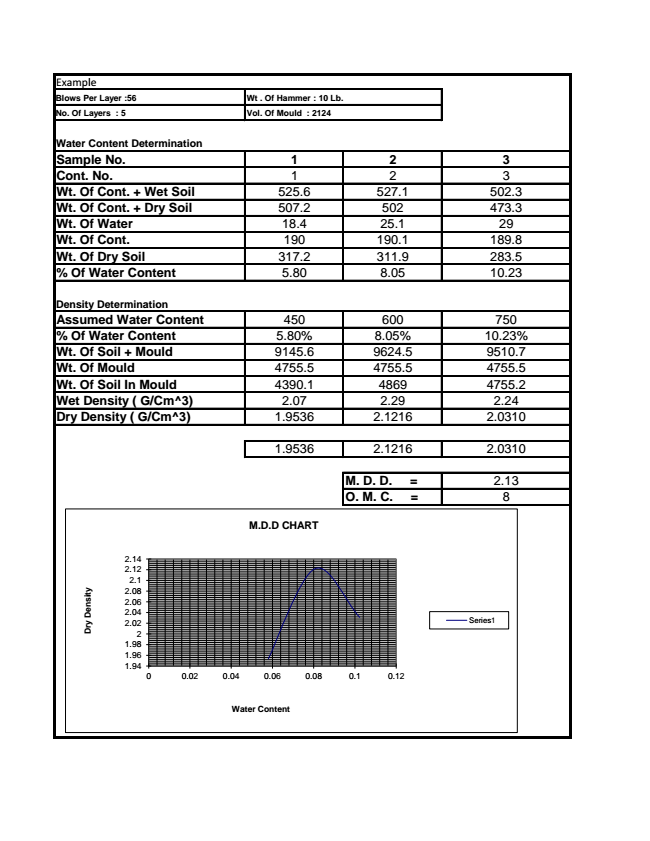
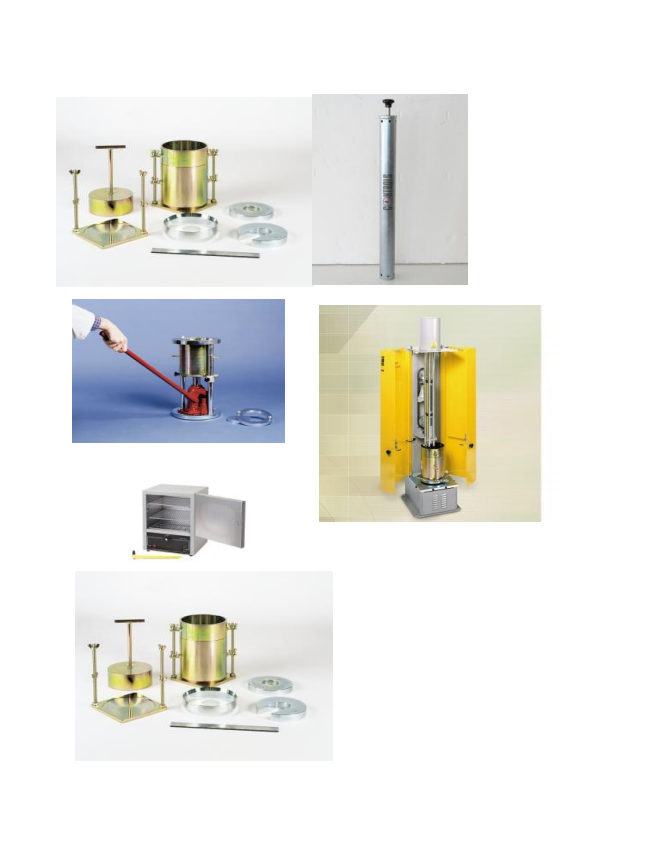
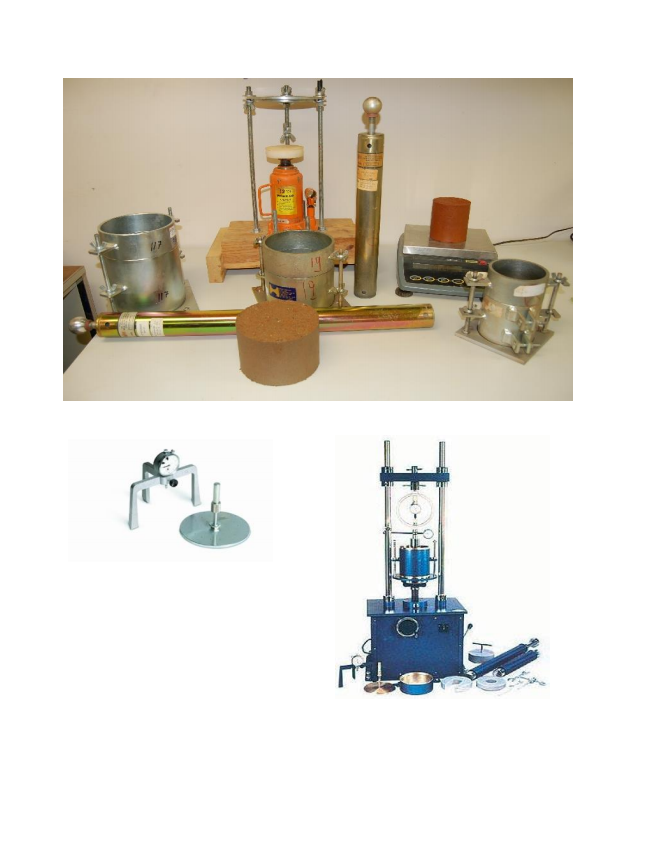
A minor reminder of what the posted tests in this photo 


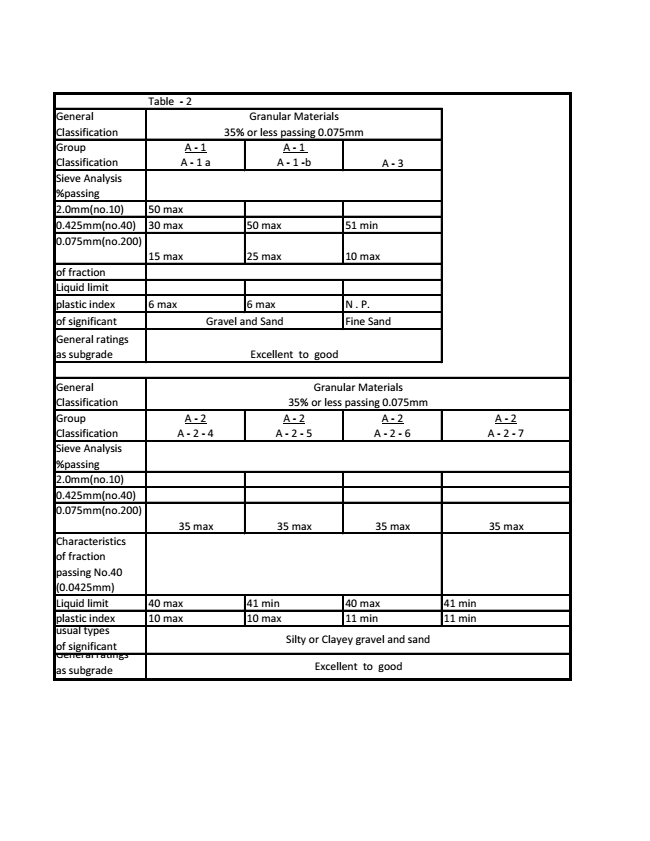
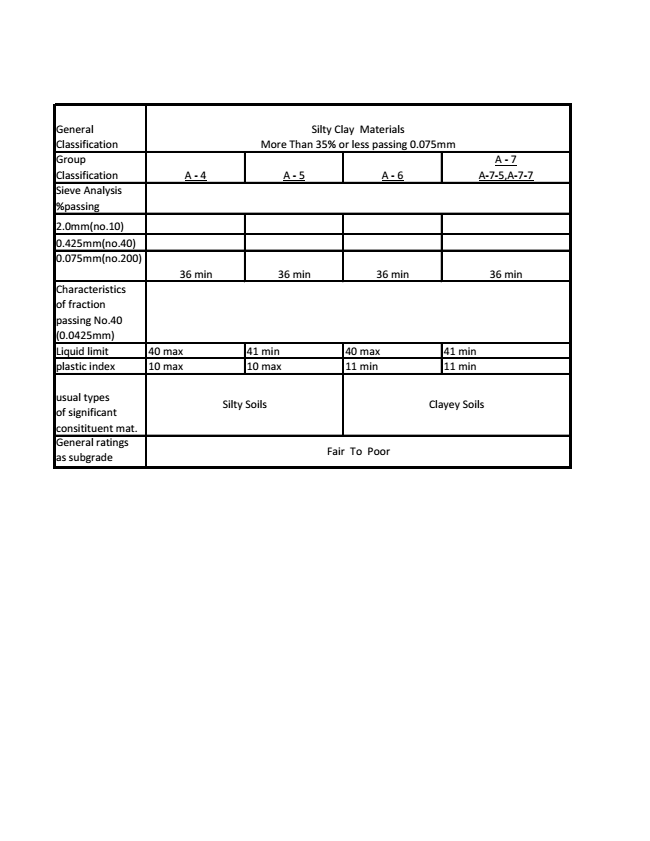
S.test#8 : Classification Of Soil


S.Test#8 : Classification of soils AASHTO M 145-91

This recommended practice describes a procedure  for classifying soils into seven groups based on lab determination of particle-size distribution. Liquid limit,plastic limit , and plasticity index evaluation of soils within each group index , should be useful in determining relative  quality of soil material for use in earthwork structure , subbase , subgrade or others .


Thursday, October 30, 2014

S.test #5#6#7 Atterberg Limit : Liquid Limit - Plastic Limit - Plasticity Index


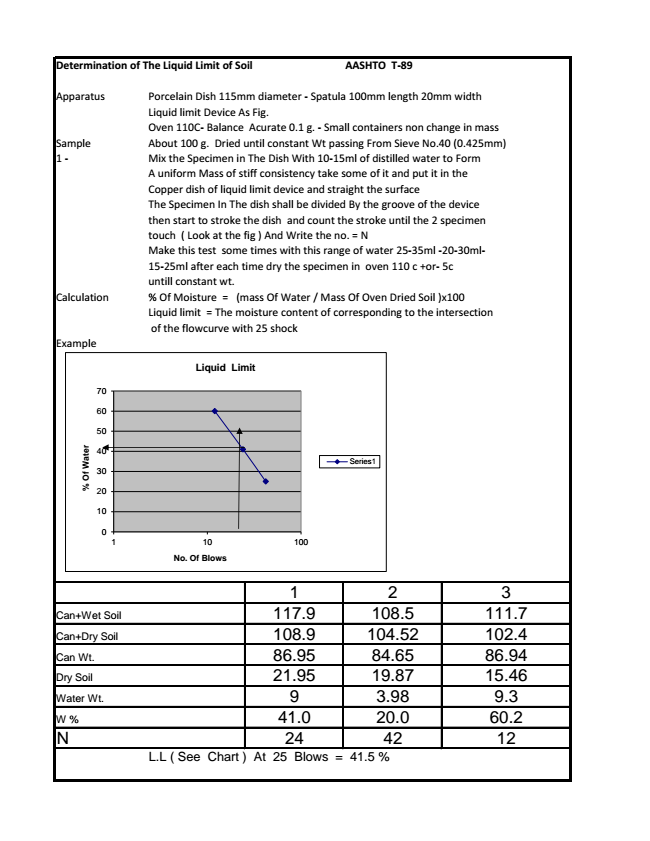
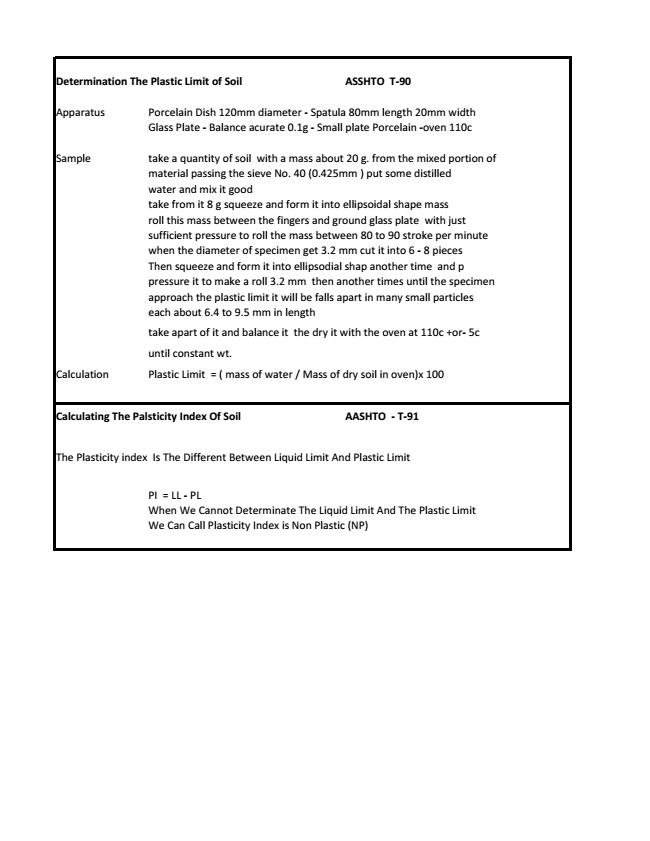
Atterberg limit contains 3 tests ( liquid limit , plastic limit , plasticity limit)

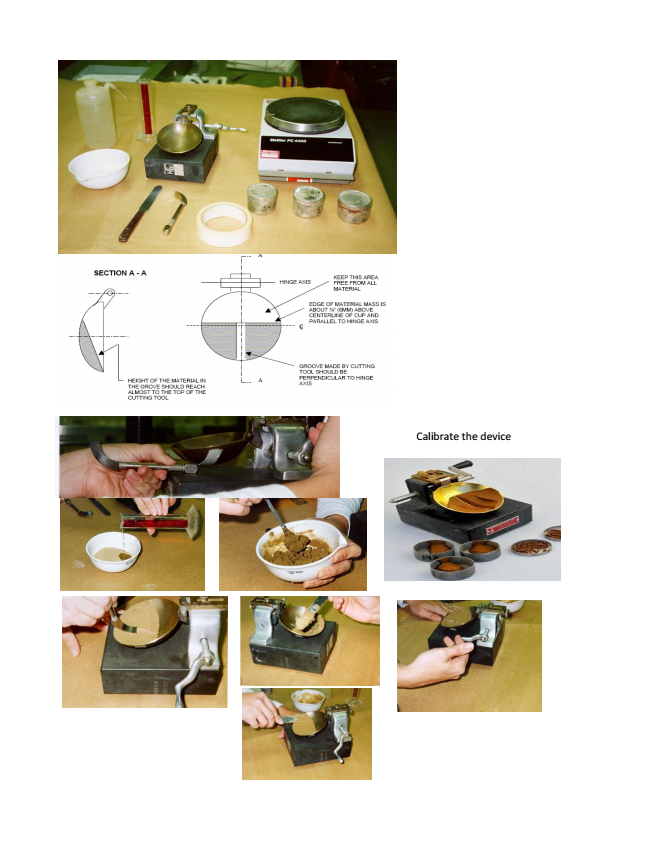
S.test #5 Determination of the Liquid limit of soil AASHTO T-89 (Atterberg limit)


This procedure covers the determination of the liquid limit of soil .It covers the change of soil from elasticity position to liquid position .


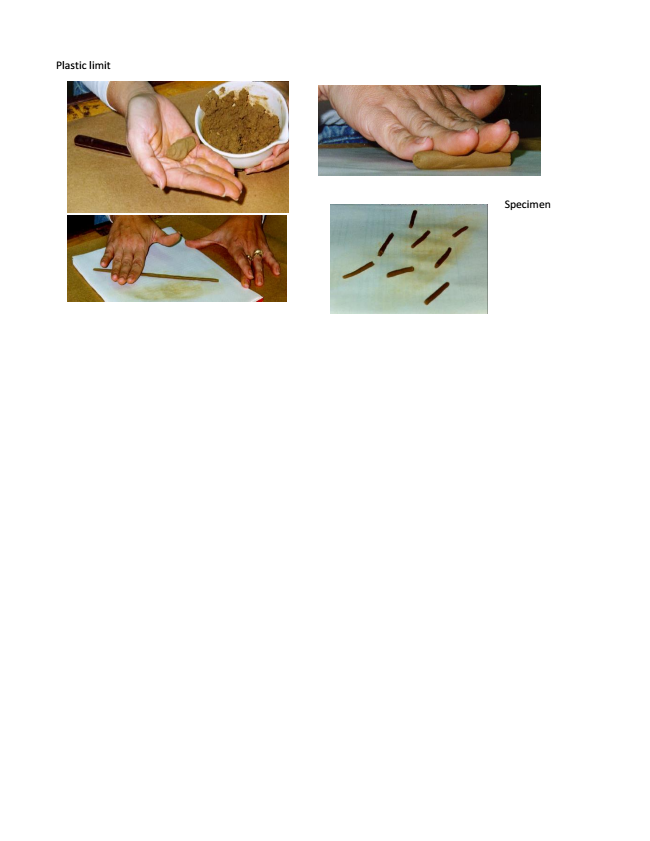
S.test#6: Plastic Limit AASHTO T - 90 (Atterberg Limit)

The plastic limit of a soil is the lowest water content at which soil remains plastic 

S.test#7 Plasticity index AASHTO T-91 (Atterberg limit)
The plasticity index of a soil is the numerical difference between the liquid limit and the plastic limit.It's the moisture content at which the soil is in a plastic state 


Wednesday, October 29, 2014

S.test#4 California Bearing Ratio


S.Tests#4: California Bearing Ration AASHTP T 193 - 93 ASTM D1883

This test method covers the determination of the California Bearing Ratio ( CBR) of pavement subgrade , subbase and basecoarse materials  rotary compacted specimen . 
The test method is primarily intended for - but not limited to - evaluating the strength of the cohesive materials having maximum particle sizes less than 19mm.It is the load to penetrate a cylinder with some speed to 0.1 in. or 01.2 in


S.TEST#3 Density Of Soil using 100lb. Rammer


S.Test#3: Density relation of soil using 100lb. Rammer AASHTO T99

this test method is intended for determining the relationship between the moisture content and density of soils when compacted in given mold of a given size with 10lb rammer dropped from a height of 457mm. 
Four alternate procedures are provided 


Monday, October 27, 2014

S.test#2: Moisture Content In Soil


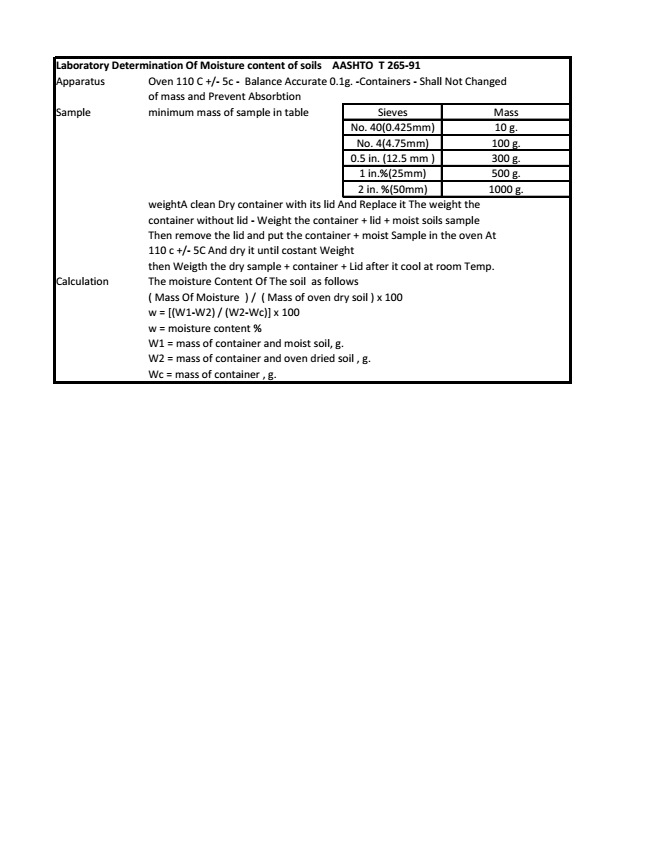
S.test#2: Laboratory Determination of moisture content of soil AASHTO T265-91


This procedure is used to determine the total moisture content of a soil . The soil is dried to remove all free moisture . This test measures the weight of the moisture removed from the soil .

S.test#1 : SandCone


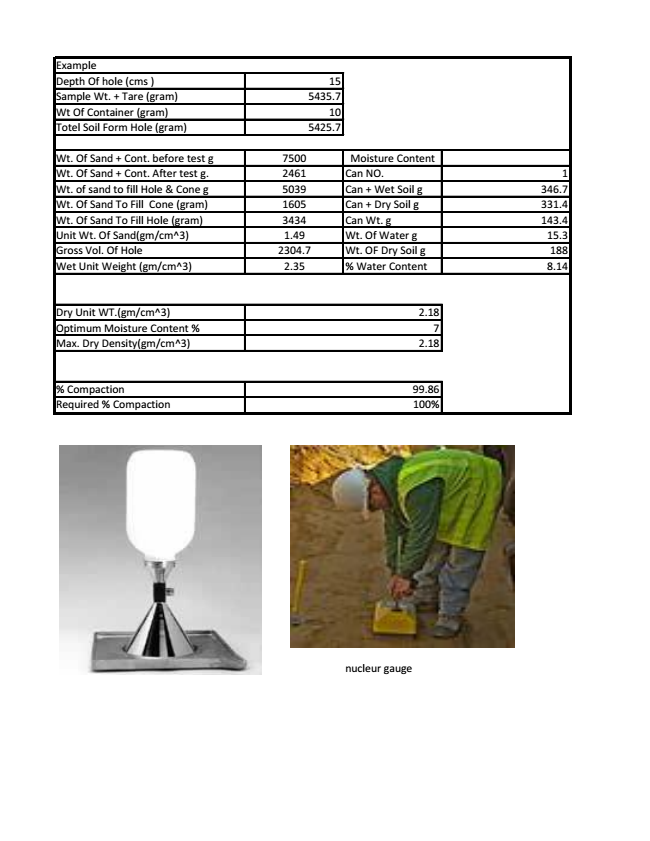
S.Test#1: Density and unit weight of soil (SAND CONE) AASHTo 191 - 93

This test method covers the determination of compaction of the field if it's done by sand cone 


Thursday, October 23, 2014

Summary of the First Chapter : MATERIAL TESTING


The core of any civil engineering design is the understanding of the behavioural , physical , and mechanical properties of the materials used . 


Today we have finished the " Material testing" category in which we have posted 13 tests , and our NEXT stop is :

" SOIL tests for highway purposes


A minor reminder of the tests ,that have been posted, in this photo 


test#13 Soundness of aggregate ASTM c - 88


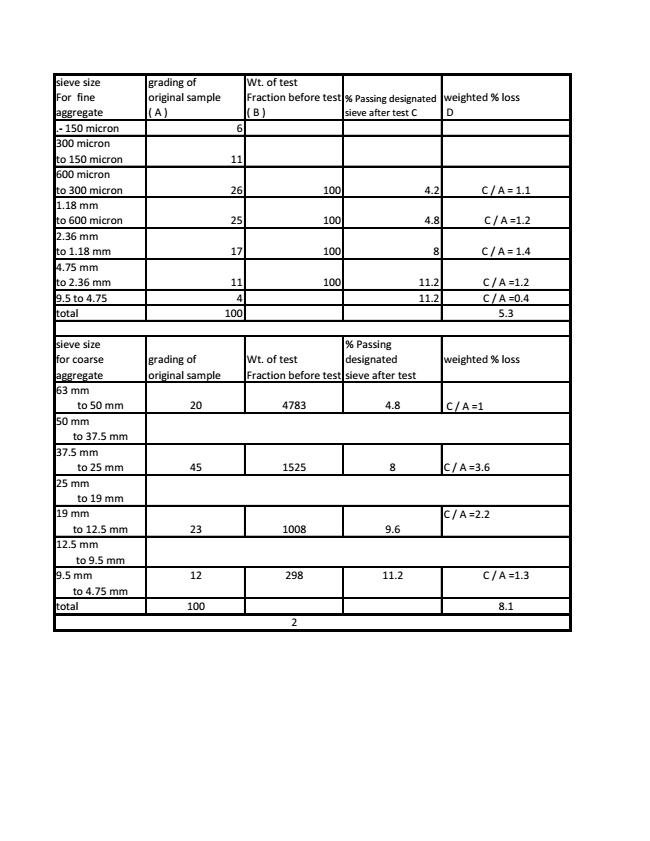
Test #13 Soundness of aggregate by sodium sulfate ASTM C - 88


This test method covers the testing of aggregates to estimate their soundness when subjected to weathering action in concrete by repeated immersion in saturated solution of sodium or magnesium followed by oven drying 


Monday, October 20, 2014

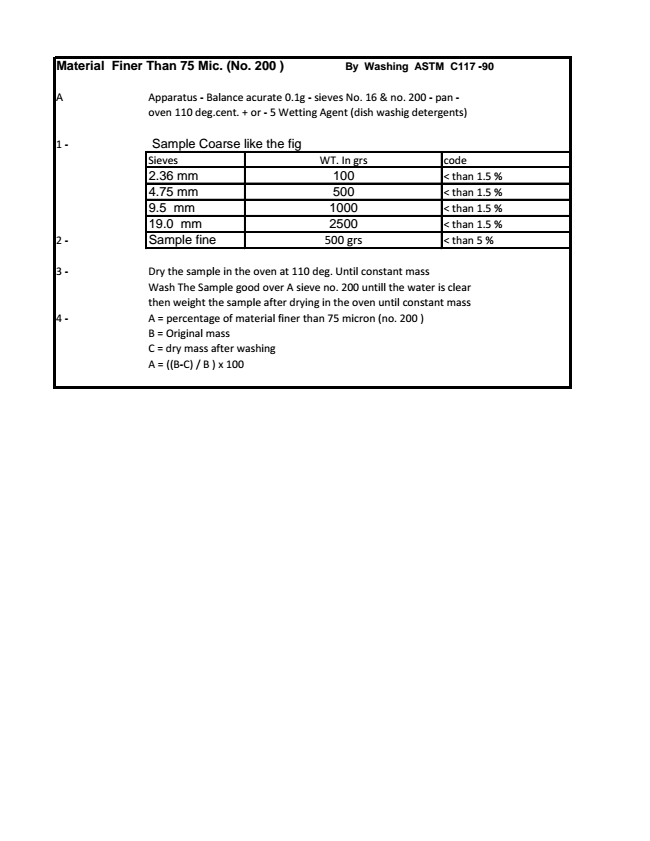
Test#12 Material Finer 75 Micron Sieve (ASTM C117-90)


Material finer than 75mi (ASTM C 117-90)


This test method covers determination of the amount of material finer than 75 micron ( No. 200) sieve in aggregate by washing clay particles and other aggregate particles that are dispersed by the wash water  as well as the water soluble materials , will be removed from aggregate during test 


Saturday, October 18, 2014

Test#11 Fineness Modulus


Determination of fitness modulus on fine aggregate (AASHTO M6)


Fitness Modulus results from a calculation on using data from a sieve analysis. The sieves used for sand are typically  the 0.15mm (No.100) 0.30 (No.50) , 0.60mm(No. 30 ) , 1.18mm (No.16) , 2.36mm (No.8) and the 4.75mm (No.4)


Friday, October 17, 2014

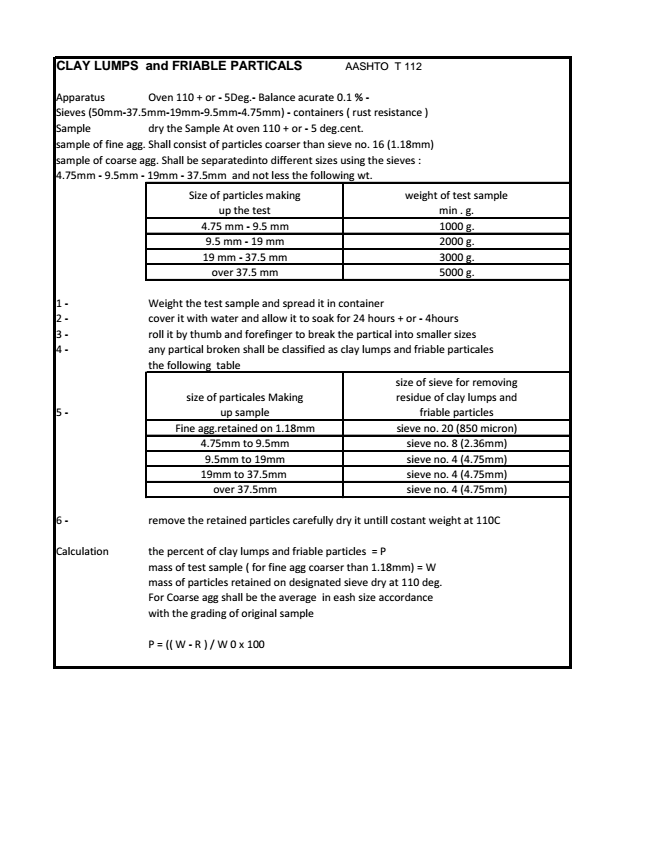
Test#10: Clay Lumps and friable particles (AASHTO T 112 - ASTM C 142)


Clay Lumps and friable particles (AASHTO T 112 - ASTM C 142)


This test method covers the approximate determination of clay lumps  and friable in natural aggregates 

Thursday, October 16, 2014

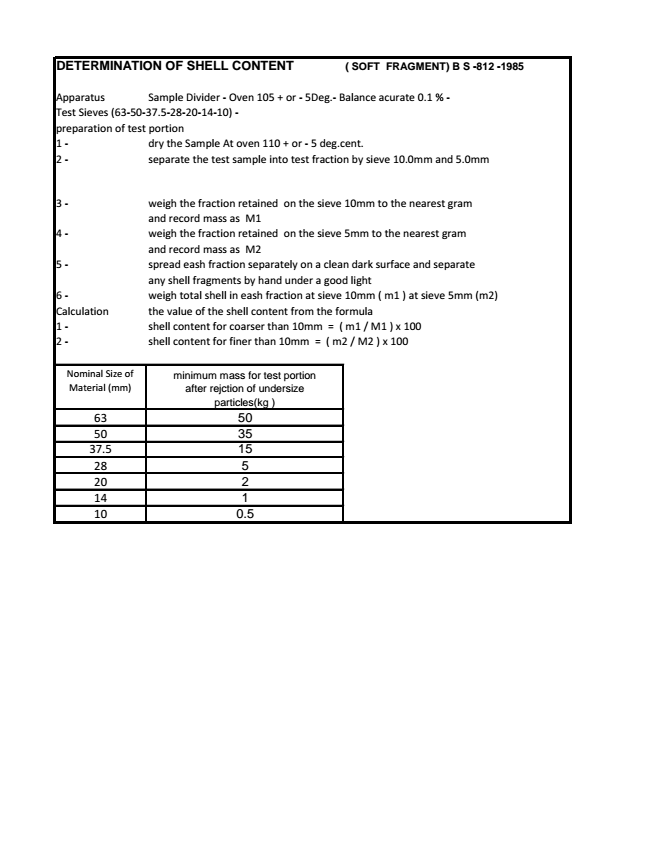
Test#9: Determination of Shell Content


Determination of Shell Content ( soft fragment BS - 812 - 1985)
This test method describes the determination of shell content of coarse aggregate 


Wednesday, October 15, 2014

Test#8: Coal And Lignite (AASHTO T 113) Lightweight pieces in aggregate ASTM C123


Coal & Lignite ( AASHTO T 113 ) Lightweight pieces in aggregateASTM C123
This test method covers the determination of the percentage of light weight pieces in aggregate  by mean of sink float separation in a heavy liquid of suitable specific gravity